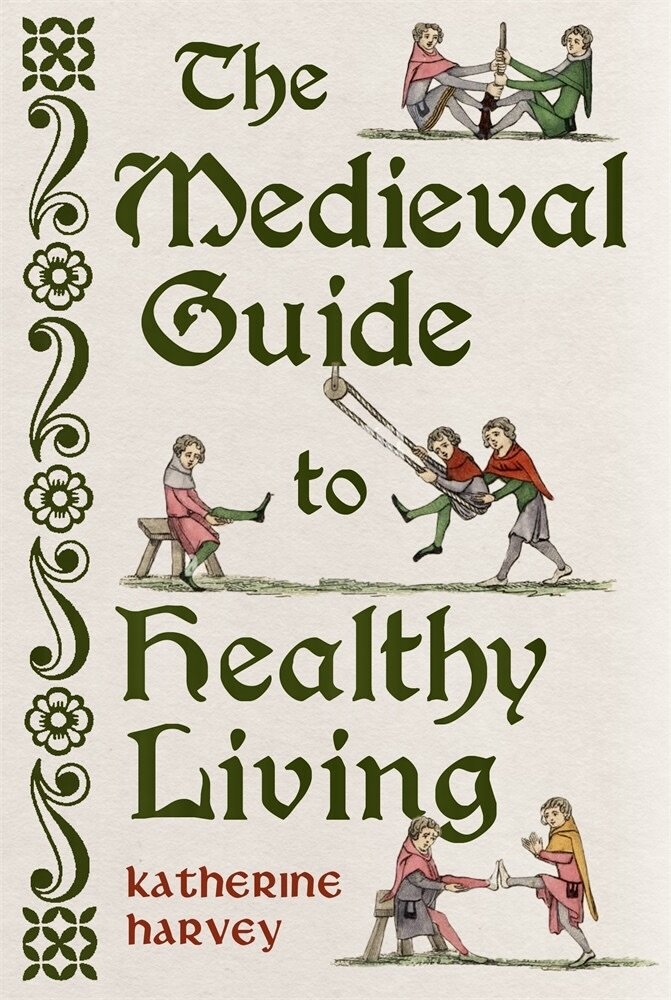
The Medieval Guide to Healthy Living
was published by Reaktion in April 2026, and is distributed in the US by University of Chicago Press.
A fresh look at medieval wellness that echoes modern healthy-living concerns.
We often think of medieval medicine as strange, unhygienic and unscientific, but The Medieval Guide to Healthy Living reveals a far richer story. Long before modern wellness trends, people in the Middle Ages were actively thinking about how to live well. They followed detailed health regimens, balanced diet with exercise, considered the effects of emotions and sought to avoid illness through environmental awareness and routine care. This book sheds light on the practical and surprisingly relatable ways medieval individuals cared for body and mind. Drawing from historical sources that echo today’s wellness concerns, it offers a fresh, thoughtful view of a misunderstood era. In understanding their world, we might see our own in a new, more connected light.
Praise for The Medieval Guide to Healthy Living:
‘I adored this delightfully cringe-inducing book. I can’t remember the last time I had so much fun learning about the past. Harvey benefits from a plethora of great material; there’s so many weird stories to make the reader squirm. Her aim, however, isn’t simply to shock. She arranges the material in a logical manner, working her way methodically round the body to provide the fullest picture of medieval health. In the end a portrait emerges that is entirely familiar. The people back then were a lot like us: they fretted about their health, took steps to improve it and cared for those who suffered. In the process of examining the medieval body, we also get a glimpse at the soul.’
Gerard DeGroot, The Times
‘[Harvey] examines how people in the Middle Ages actually understood health and healthcare. As it turns out, from digestion to ageing, mental health to exercise, the concerns of the medieval layman often mirrored our own . . . The Medieval Guide to Healthy Living is finely researched and richly detailed, and Harvey has gone to monumental efforts to make her case. You can’t emerge from it unconvinced that the trope of a filthy medieval person is outdated. The facts speak for themselves . . . as social histories of the Middle Ages go, this is eminently enjoyable – warts and all.’
Helen Carr, The Daily Telegraph
‘Vomit, bloodletting, holy kisses- medicine in the Middle Ages was a dramatic affair. But as Harvey’s energetic book makes clear, the concerns of the medieval layman were similar to our own, and their attitude to the elderly and disabled weren’t what posterity likes to think.’
Summer Recommended Reads, The Daily Telegraph
‘A book that will upend our view of the past, this time disabusing us of the Medieval reputation of dirt and lack of hygiene . . . Harvey's revisionist history uncovers a time when people strove to live a healthy and balanced life.'
The Bookseller: Health and Diet Spotlight 'Expert Pick'
'Tackling head-on a range of worn cliches about medieval backwardness, Katherine Harvey brings vividly to life a society that was just as preoccupied with health and wellbeing as we are today. This engaging and impeccably researched book casts a new light on the Middle Ages and should be required reading for anyone with an interest in medical history.'
Carole Rawcliffe, Emeritus Professor of Medieval History, University of East Anglia, and author of Urban Bodies: Communal Health in Late Medieval English Towns and Cities
'Living well was a medieval obsession as much as a contemporary one. Katherine Harvey shows that health advice was founded on surprisingly sophisticated medical ideas about how the human body interacted with its environment. Courts, cities and religious groups across Europe all adopted rules to avoid infection and pestilence. The book is brimming with a wealth of fascinating individual stories of medieval people high and low trying to stay healthy in a world full of risks.'
Peter Murray Jones, Fellow and former Librarian of King’s College, Cambridge, and author of The Medicine of the Friars in Medieval England
‘In The Medieval Guide to Healthy Living, Katherine Harvey offers a clearly written, lively exposé of medieval ideas about, and practices for, health and wellness that challenge our modern misconceptions of the era. At times serious but often infused with humour, Harvey’s work reminds us that concern for our health, and taking action to protect it, is part of what makes us human, even if our understanding of how the body works has changed over the centuries.'
Lori Jones, Adjunct Professor, University of Ottawa, and author of Patterns of Plague: Changing Ideas about Plague in England and France, 1348–1750